
Waste heat recovery
Waste Heat Recovery for Industrial Drying Processes
In web-based printing, coating and converting, most of the energy you pay for leaves the line as hot, humid exhaust air. A waste heat recovery system captures that energy and returns it to the process instead of the atmosphere — lowering energy consumption, operating costs and CO₂ emissions.
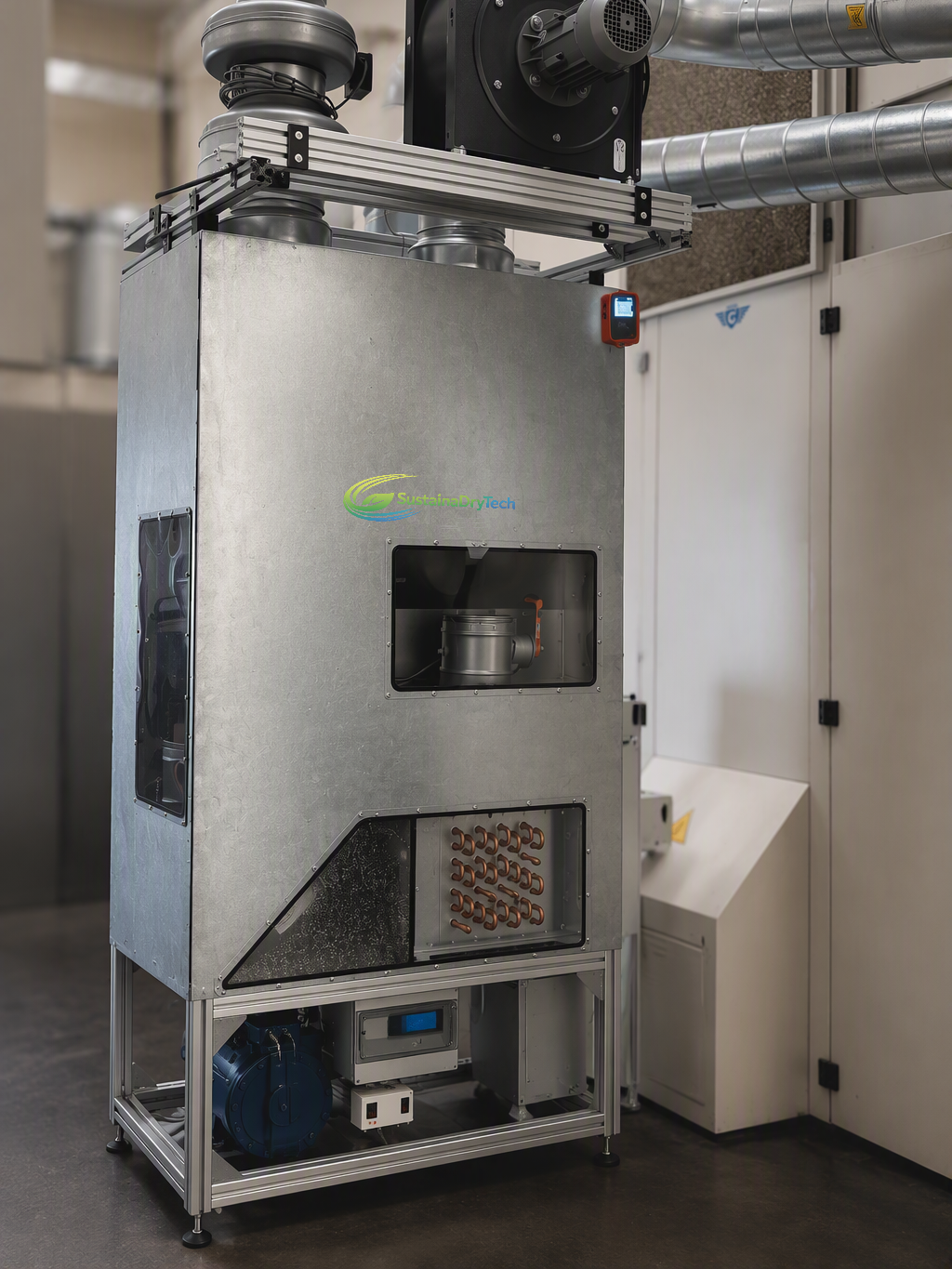
What is waste heat recovery?
Waste heat recovery means capturing thermal energy that a process would otherwise discard and reusing it somewhere it creates value. In industrial drying, the waste heat sits in the dryer exhaust: air that has been heated, passed over the web and vented while still warm.
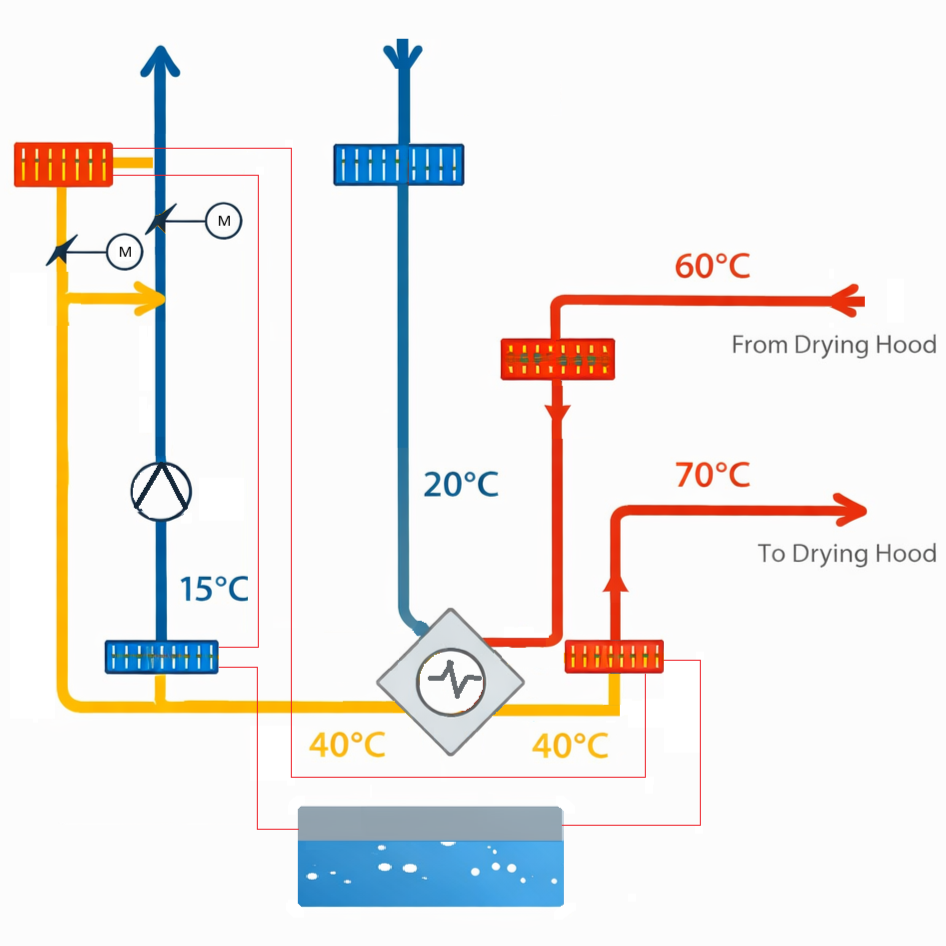
An energy recovery system transfers that heat to the incoming fresh air through a heat exchanger. A heat pump-based system goes one step further and upgrades the recovered heat to the temperature the process actually needs, so far less new energy has to be generated at all.
Where the heat is lost
Hot exhaust air
Dryer exhaust leaves the line warm and humid, carrying away most of the energy that was just paid for.
Over-ventilation
Air volumes are often set higher than the process requires, which multiplies the energy leaving the system.
Gas-fired heating
Burners generate heat from fuel every cycle and tie drying costs and CO₂ emissions directly to gas prices.
No return path
Without a recovery loop, none of the exhaust energy is available to preheat or reheat the process air.
Closed loop
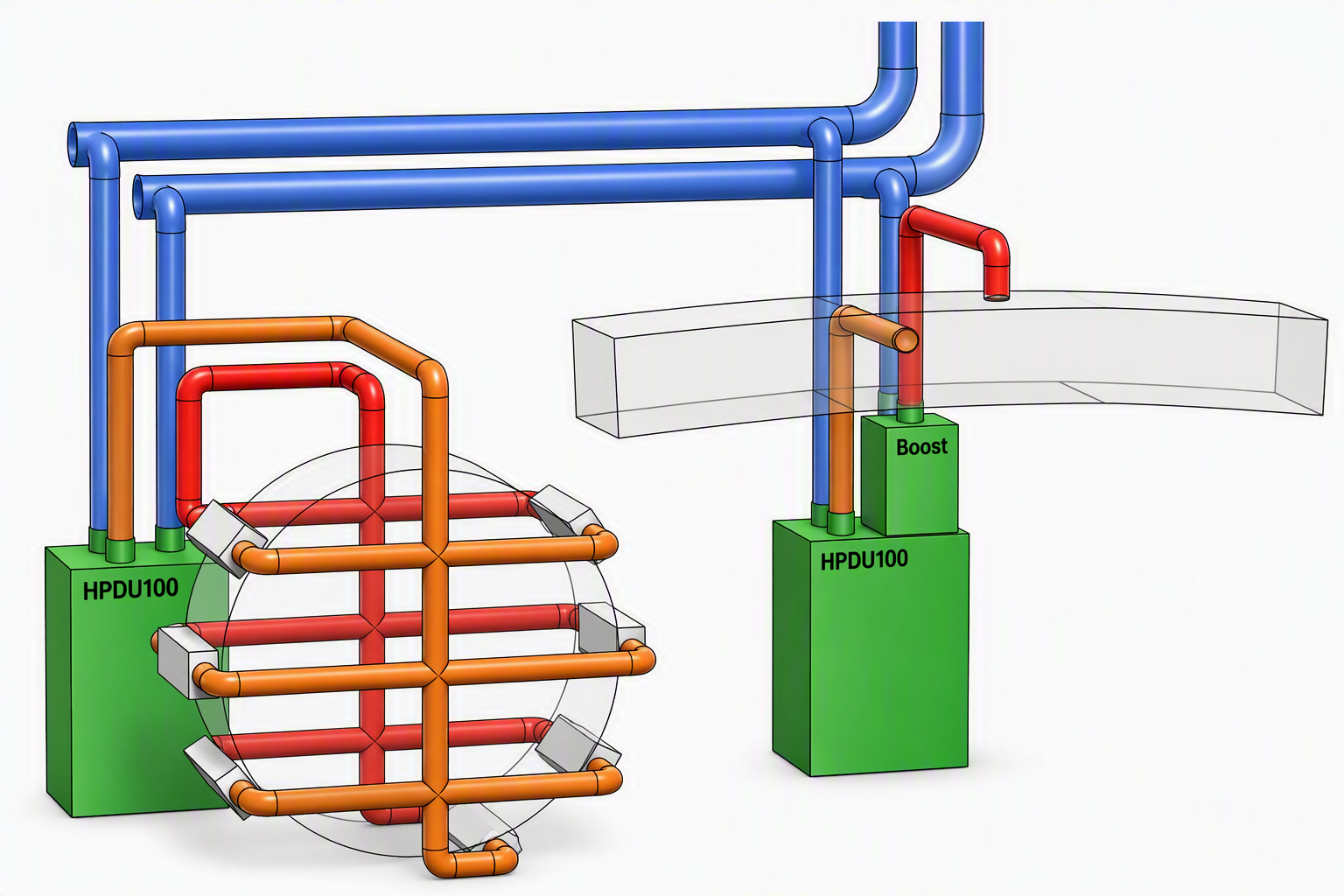
How DryLoop™ HPDU recovers waste heat
Generate heat efficiently
Electric heat pump technology produces the process heat, replacing or reducing gas-fired burners.
Use it effectively
Optimised air handling delivers the right temperature and air volume to the web, so less energy is needed per metre.
Recover it intelligently
Energy in the exhaust stream is captured, upgraded and returned to the supply air in a closed loop.
What waste heat recovery delivers
Energy reduction
Recovered heat replaces energy that would otherwise have to be generated from scratch.
CO₂ reduction
Electrified drying removes gas from the process and cuts emissions accordingly.
Drying capacity
Better drying performance can lift line speed where drying limits production.
Typical ROI
Payback depends on process and energy prices, but typically falls in this range.
Where waste heat recovery applies
Flexographic printing
CI and stack presses with hot-air drying between stations and in the final dryer.
Digital web printing
Water-based inkjet lines where drying capacity often sets the maximum speed.
Coating & laminating
High-volume air handling with large exhaust streams and significant recovery potential.
Web offset printing
Gas-fired dryers that can be electrified while reusing the exhaust energy.
Is your process a fit?
- Your process has an exhaust air stream and an ingoing air stream
- Drying is gas-fired or uses electric hot air
- Drying capacity limits your line speed
- You have energy cost or CO₂ reduction targets
- You are planning a retrofit or a new installation
Waste heat recovery FAQ
How does waste heat recovery work in an industrial dryer?
A dryer blows heated air over the web and exhausts it hot and humid. A waste heat recovery system captures the thermal energy in that exhaust stream, transfers it to the incoming fresh air through a heat exchanger and, in the DryLoop™ HPDU, upgrades it further with heat pump technology so it can reheat the process air instead of being vented to the atmosphere.
Can waste heat recovery replace gas burners?
Yes. In many printing and coating applications, DryLoop™ HPDU can replace conventional gas-fired heating systems while maintaining the required drying conditions.
Can heat recovery be retrofitted to an existing dryer?
Yes. It is common to upgrade the heating system for existing drying systems, so heat recovery can be added to installed presses and coating lines as well as to new installations.
Which processes are suitable for waste heat recovery?
Any process with an exhaust air stream and an ingoing air stream can benefit. This includes flexographic printing, digital web printing, coating and laminating lines and web offset printing, in both water-based and many solvent-based applications.
What payback period can be expected on waste heat recovery?
Typically 2-3 years depending on process and energy prices.
Let's evaluate your drying process
Send us your process data and we will assess where waste heat is leaving your line and what recovery and electrification could realistically deliver.